
Blog > What Causes Hollow-Sounding Tile?
What Causes Hollow-Sounding Tile?
Monday, November 2nd, 2026
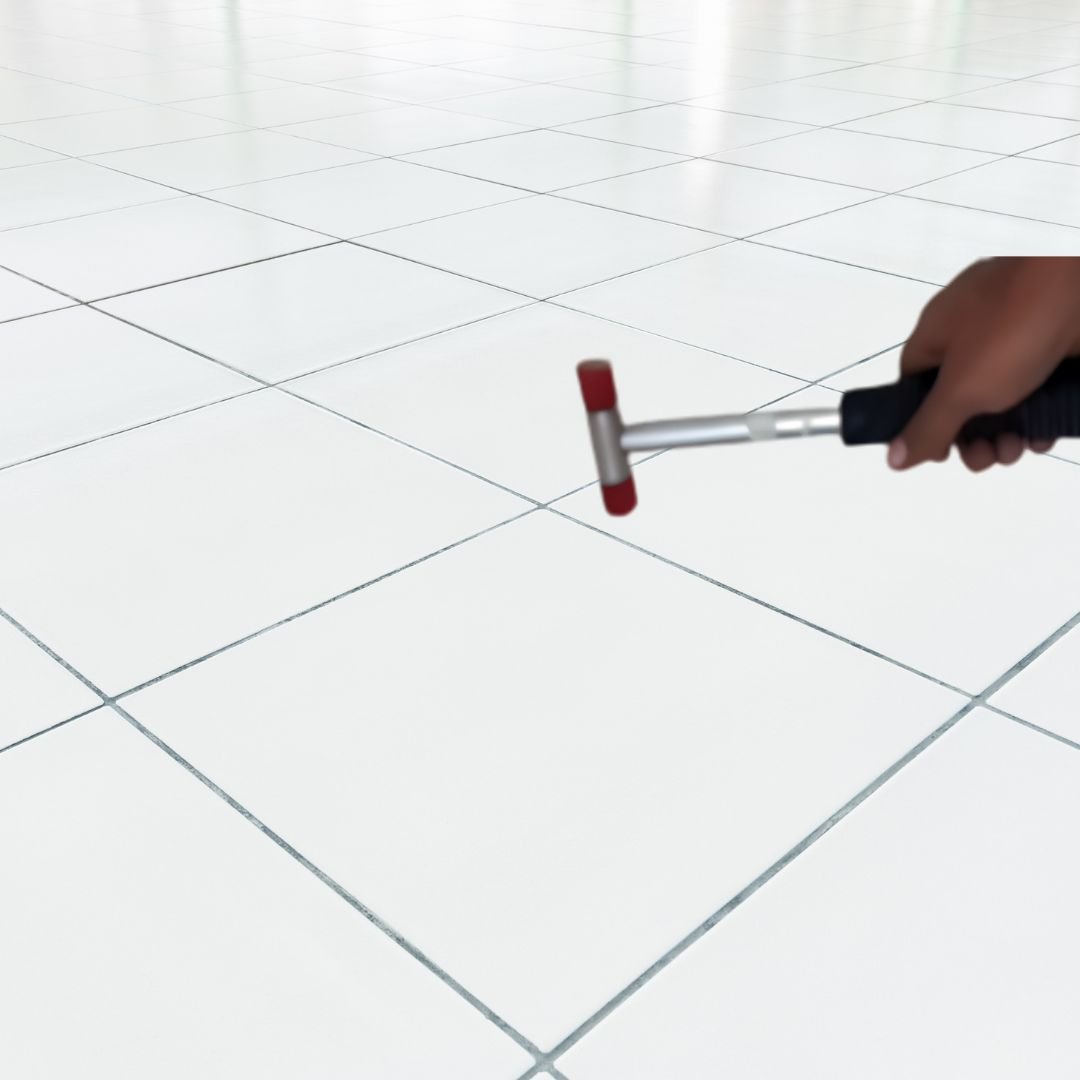
If you tap on a tile floor and notice that some tiles sound solid while others sound hollow, it can be concerning.
A hollow sound does not always mean the tile is about to fail, but it can indicate that the tile is not fully bonded to the surface below. In some cases, the problem may remain stable for years. In others, it can lead to loose tile, cracking, or movement. Understanding what causes hollow-sounding tile can help homeowners know when to monitor the issue and when to call a flooring professional.
What Does a Hollow Tile Sound Mean?
Tile is typically installed over a subfloor or concrete slab using mortar or another bonding material. When the tile is properly supported, tapping it often produces a more solid sound. A hollow sound may indicate that there are areas beneath the tile where the bonding material is missing, uneven, or no longer firmly attached.
The amount of unsupported space can vary significantly from one tile to another.
Common Cause #1: Incomplete Mortar Coverage
One of the most common causes is insufficient mortar coverage during installation. If the adhesive or mortar is not evenly distributed beneath the tile, pockets of empty space may remain. This can happen when:
- Too little mortar is used
- Mortar ridges are not properly collapsed
- The tile is not pressed firmly into place
- The wrong trowel size is used
- Large-format tile is installed without adequate coverage
The larger the tile, the more important proper mortar coverage becomes.
Common Cause #2: Poor Bonding
A hollow sound can also develop when the tile does not bond properly to the surface underneath it.
Bonding problems may result from:
- Dust or debris on the subfloor
- An improperly prepared concrete slab
- Old adhesive residue
- Using the wrong bonding material
- Mortar drying before the tile is placed
- Moisture issues
If the bond weakens over time, the tile may begin separating from the substrate.
Common Cause #3: An Uneven Subfloor
Tile performs best over a flat, stable surface. If the concrete slab or subfloor contains high and low spots, the tile may not receive uniform support. This can leave voids beneath portions of the tile. Large-format tile is especially sensitive to floor flatness because one tile may span a much larger area than a smaller tile. Proper floor preparation before installation can help reduce these problems.
Common Cause #4: Movement Beneath the Tile
Movement can also contribute to hollow-sounding or loose tile. Possible sources include:
- Cracks in the concrete
- Subfloor movement
- Structural settling
- Temperature changes
- Improper expansion or movement joints
Tile itself is rigid, so repeated movement underneath it can eventually weaken the bond. This may lead to cracking, loose grout, or tiles that shift when walked on.
Can Tile Become Hollow Over Time?
The answer is, yes, it can. A tile may have been properly installed initially but develop bonding problems later. Water intrusion, slab movement, repeated impact, or changes in the underlying surface can contribute to separation. Homeowners may notice the problem after:
- A plumbing leak
- Water intrusion near an exterior door
- Renovation work
- Cracks appearing in the slab
- Years of heavy traffic
If a section of flooring suddenly begins sounding different, it is worth having the area evaluated.
Is a Hollow-Sounding Tile Always a Problem?
Not necessarily. A tile can sound slightly hollow and remain stable, particularly if the unsupported area is small. The sound becomes more concerning when it is accompanied by other warning signs.
Be on the lookout for:
- Tile movement when stepped on
- Cracked grout
- Loose grout
- Cracked tile
- Raised edges
- Clicking or shifting sounds
- Multiple neighboring tiles becoming hollow
- Changes appearing over time
A hollow sound alone may not require immediate replacement, but hollow sound combined with movement usually deserves attention.
What About Large-Format Tile?
Large-format tile has become extremely popular in South Florida homes. Because these tiles cover more surface area, proper floor preparation and mortar coverage are especially important. If the slab is uneven or mortar coverage is inconsistent, hollow areas may become more noticeable.
Professional installers may use specialized troweling techniques and leveling systems to improve contact and create a more even installation.
Could Moisture Be the Cause?
Moisture can contribute to tile problems, especially when it affects the bonding material or substrate. Possible sources include:
- Plumbing leaks
- Water intrusion
- Moisture vapor through concrete
- Pool or patio areas
- Damaged exterior doors or windows
If hollow tile appears near a bathroom, kitchen, sliding door, or other moisture-prone area, the source should be investigated. Replacing the tile without correcting an underlying moisture problem may only provide a temporary solution.
Can Hollow Tile Be Repaired?
The answer is sometimes. The correct repair depends on the condition of the tile and the cause of the problem. Possible solutions may include:
- Monitoring a stable tile
- Replacing an individual loose tile
- Removing and resetting several tiles
- Repairing the underlying subfloor
- Addressing slab cracks or moisture issues
- Replacing a larger section if the problem is widespread
Trying to repair the surface without determining why the tile became hollow can lead to repeat problems.
When Should You Be Concerned?
Consider having the flooring professionally evaluated by a licensed flooring installer if:
- The tile moves underfoot
- Grout keeps cracking
- Several tiles sound hollow
- The hollow area is growing
- Tile edges are lifting
- Cracks appear across multiple tiles
- There has been a recent water leak
- The flooring was installed recently and problems are already appearing T
These signs may indicate that the issue goes beyond a minor void beneath one tile.
Professional Installation Makes a Difference
Many hollow-tile problems begin with conditions that could have been addressed during installation. Good installation involves more than simply placing tile onto mortar. It can require:
- Evaluating the slab
- Correcting uneven areas
- Cleaning and preparing the surface
- Choosing the proper mortar
- Using the correct trowel
- Achieving sufficient coverage
- Planning movement joints
- Following manufacturer recommendations
These details can significantly affect the long-term performance of the floor.
Let Jason's Carpet & Tile Help
If your tile sounds hollow, the first step is determining whether it is simply a sound difference or a sign of a larger bonding or subfloor problem. Jason's Carpet & Tile can help evaluate existing tile, identify visible warning signs, and discuss repair or replacement options when needed.
Whether you are dealing with one questionable tile or planning a completely new installation, proper preparation and professional installation can help create a floor designed to perform for years.
Contact us today at 954-231-4487 to schedule a free estimate.